23. Wall Mural The Fusion of East and West
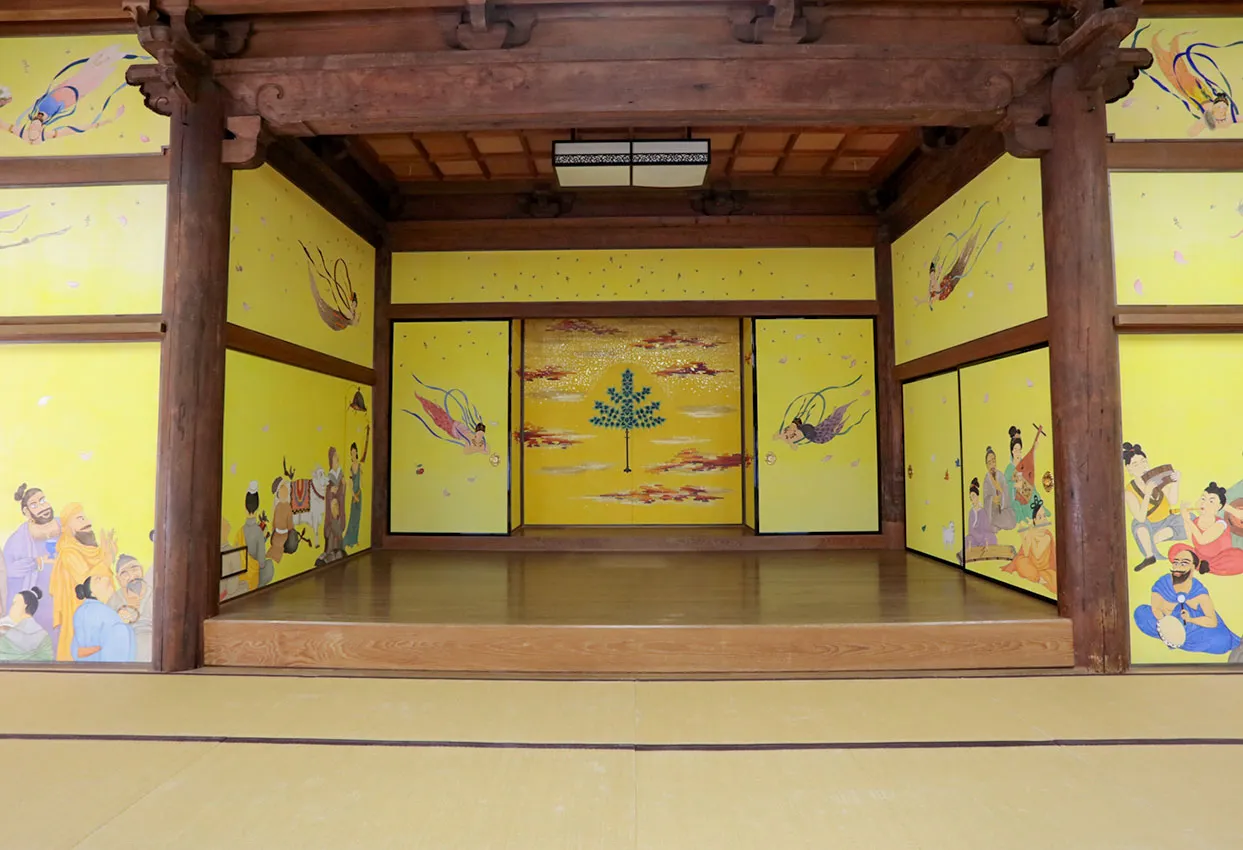
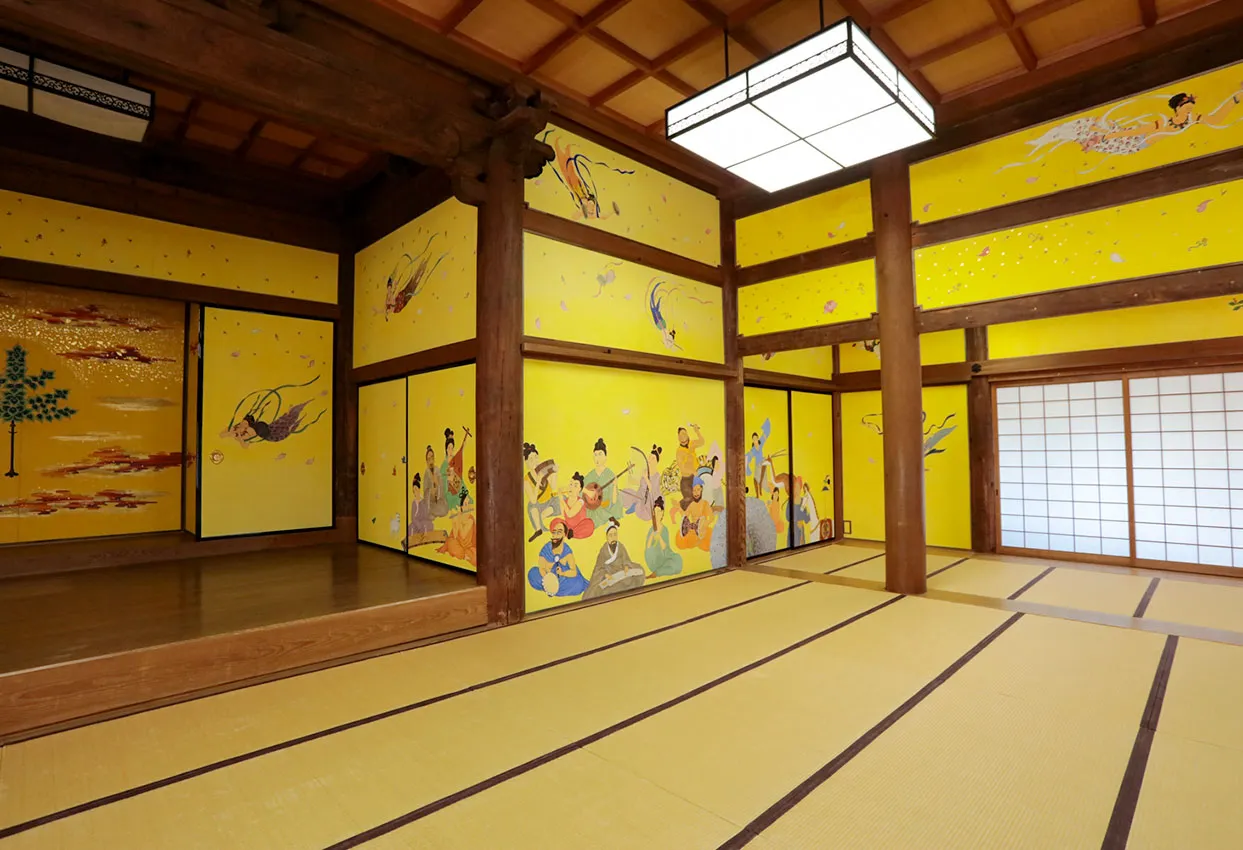
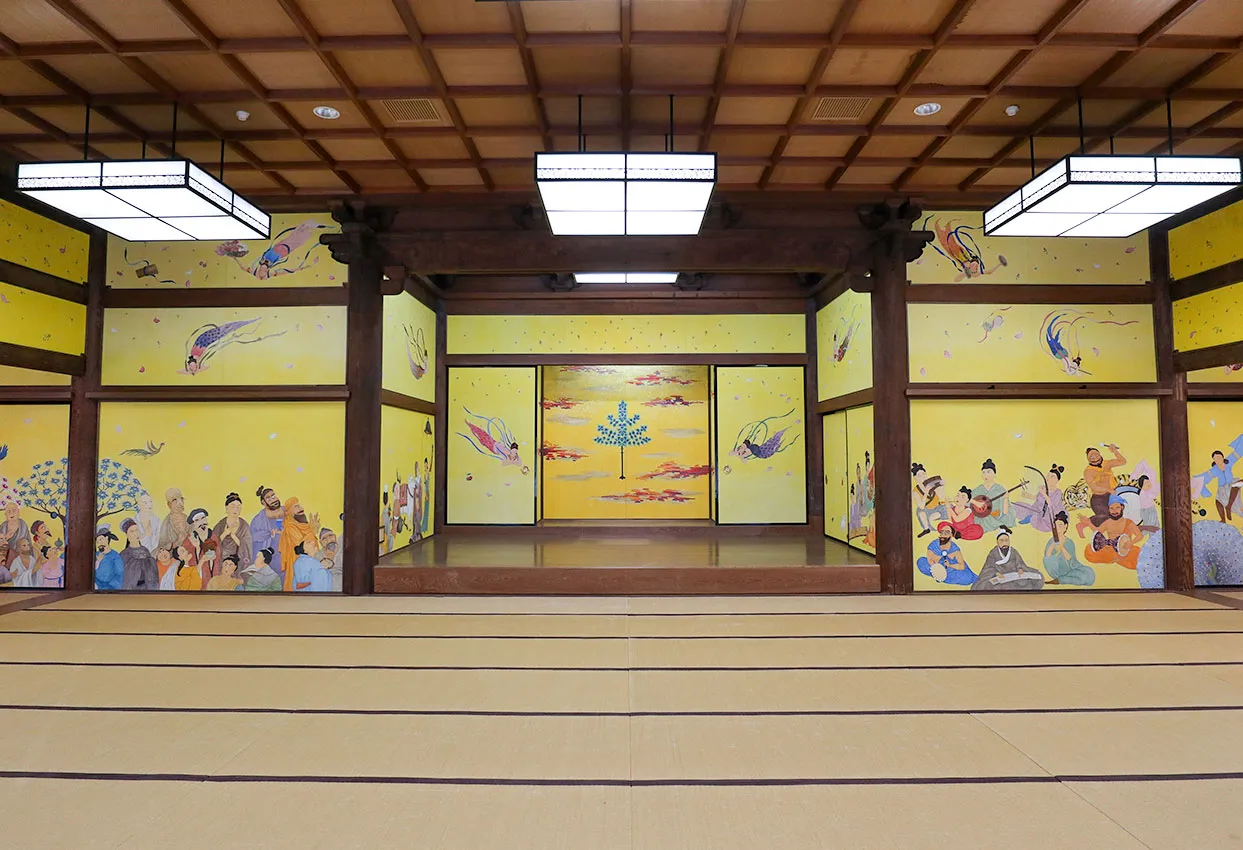
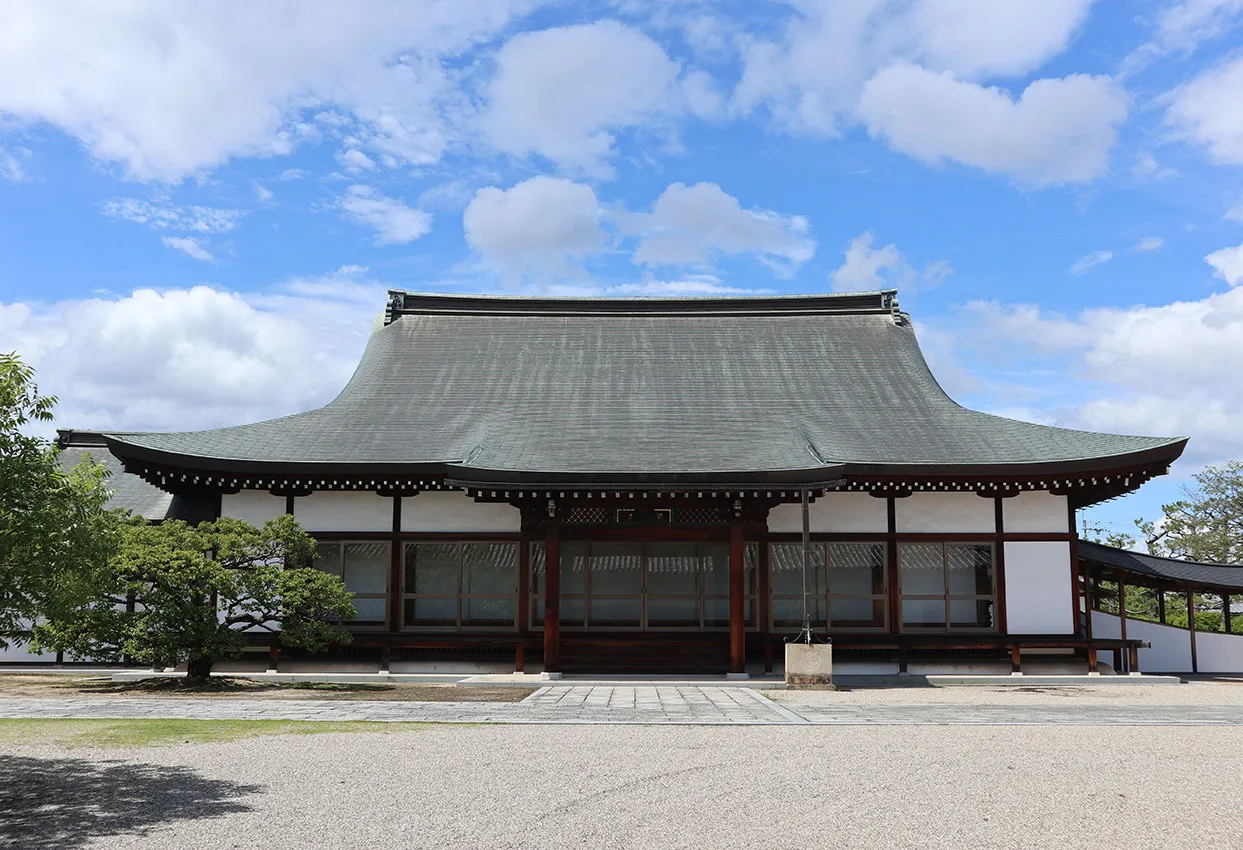
The mural titled The Fusion of East and West (Higashi to nishi no yugo) consists of 66 panels of 113 pieces. With a combined length of 157.72 meters, it covers the walls of the Jionden Hall in their entirety. Former Prime Minister Hosokawa Morihiro (b. 1938) painted the mural over a six-year period, completing it in 2019. The work celebrated the East Pagoda’s restoration, which was completed the following year.
For inspiration, Hosokawa looked to the journey of the Chinese priest Xuanzang (602–664), known in Japan as Genjo Sanzo, who traveled to India in search of sacred texts. Genjo returned to China with sutras that would form the foundation of Hosso philosophy. In creating his mural, Hosokawa’s work chronicles Genjo’s arduous journey across the continent.
Shakyamuni Buddha is represented in the center of the mural by the bodhi tree, the sacred fig tree under which he meditated and which serves as a symbol of his enlightenment. To the Buddha’s left are supplicants bearing gifts. Buddhist teachings are represented above them as a scroll of sutras tied with ribbon. To the Buddha’s right are animals and people from various cultures playing ancient instruments. Above them floats the musical score for the Jesuit drama Mulier fortis (A Strong Woman), written by Austrian composer Johann Bernhard Staudt (1654–1712). It portrays the life of Hosokawa Gracia (1563–1600), Hosokawa’s ancestor, who was persecuted for converting to Christianity and eventually forced to commit ritual suicide.
Images on the upper panels and ceiling represent the Pure Land, a Buddhist paradise inhabited by flying celestial maidens and immortal creatures known in Sanskrit as the kalavinka, which have human heads, avian torsos, flowing tails, and beautiful voices. To either side of the front wall are the deities of wind and thunder, Fujin and Raijin. On the right wall of the outer corridor stand the Ten Great Kings, who judge souls in the afterlife.
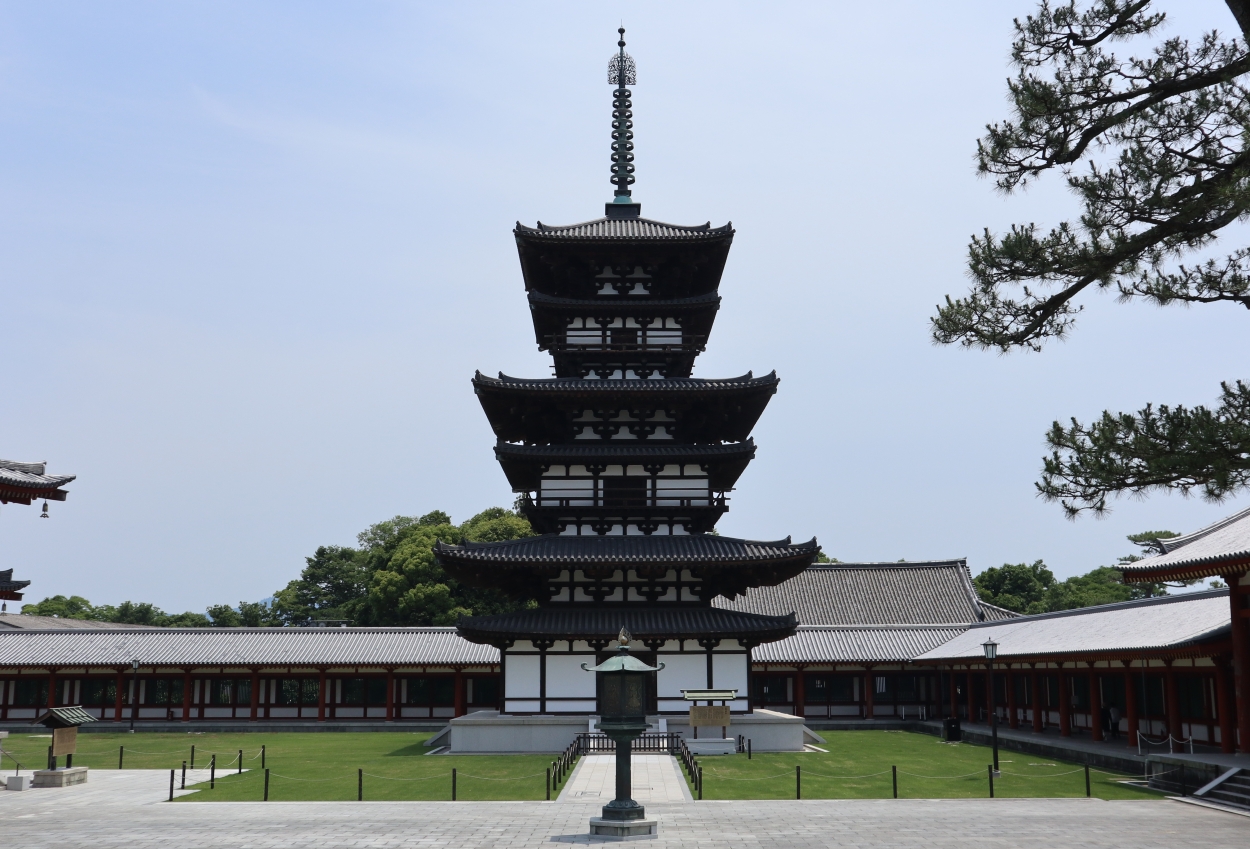
On the back left wall is a painting of one of the founders of the Hosso school, Jion Daishi (Ch. Kuiji; 632–682), after whom the building is named. He is portrayed looking over his shoulder in the direction of his master Genjo’s statue, which stands in the pagoda behind the Jionden Hall.
The mural also depicts the passage of the seasons, shifting gradually from summer to winter. The front wall shows falling cherry blossoms in spring; the center of the hall shows summer lotus flowers; the back wall illustrates autumn with reddening maples to the left and right; and the rear wall portrays the darkness and cold of winter.
Hosokawa employed a painting method similar to one used for frescoes in European Christian churches: He applied white clay to paper and painted with Italian pigments. A close look reveals the outlines of the original rough sketches.
The mural is open to the public from late April through early May, then again in late October to early November.