22. Jionden Hall
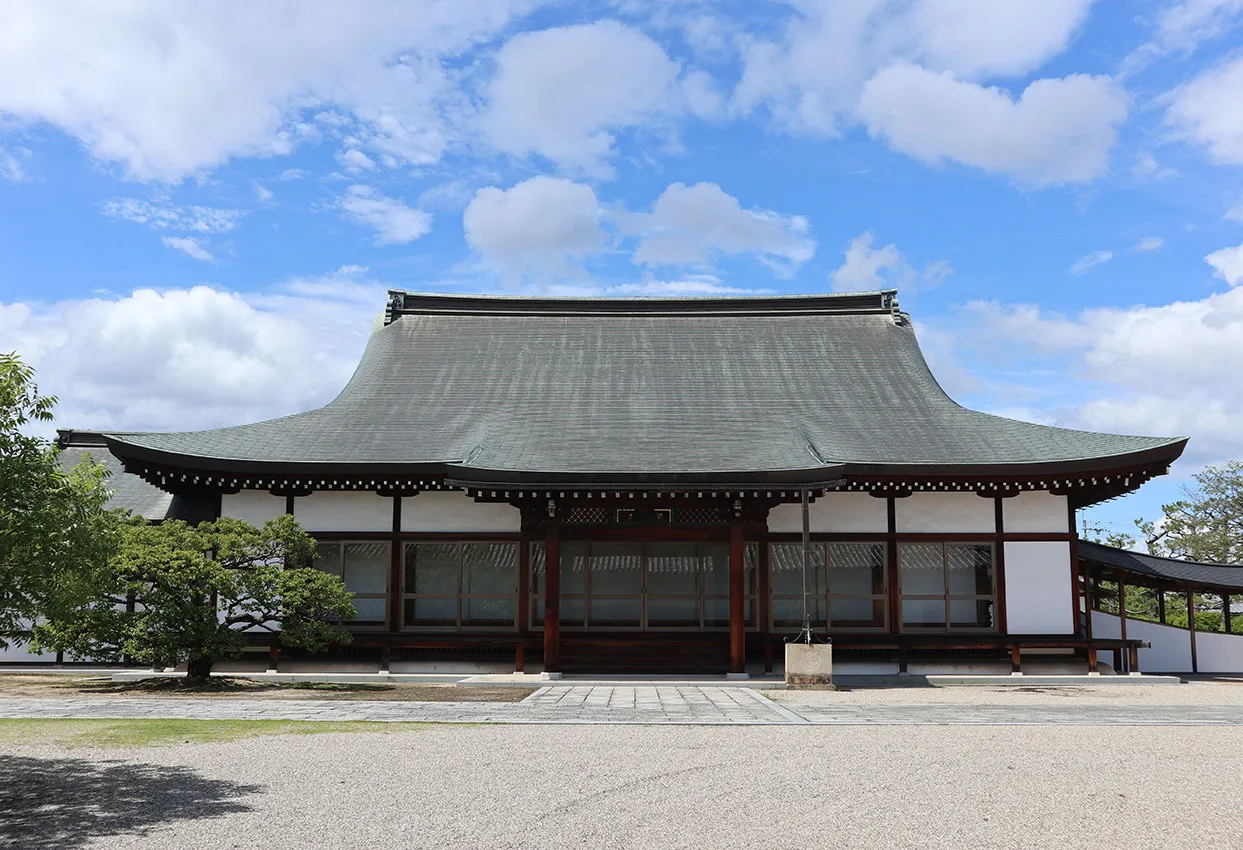
The Jionden Hall is thought to date to the early seventeenth century. It is named after the Chinese priest Kuiji (632–682), known in Japan as Jion Daishi, who founded the Hosso school of Buddhism with his master, Xuanzang (602–664), or Genjo Sanzo. Yakushiji Temple is the modern-day head temple of the Hosso school in Japan.
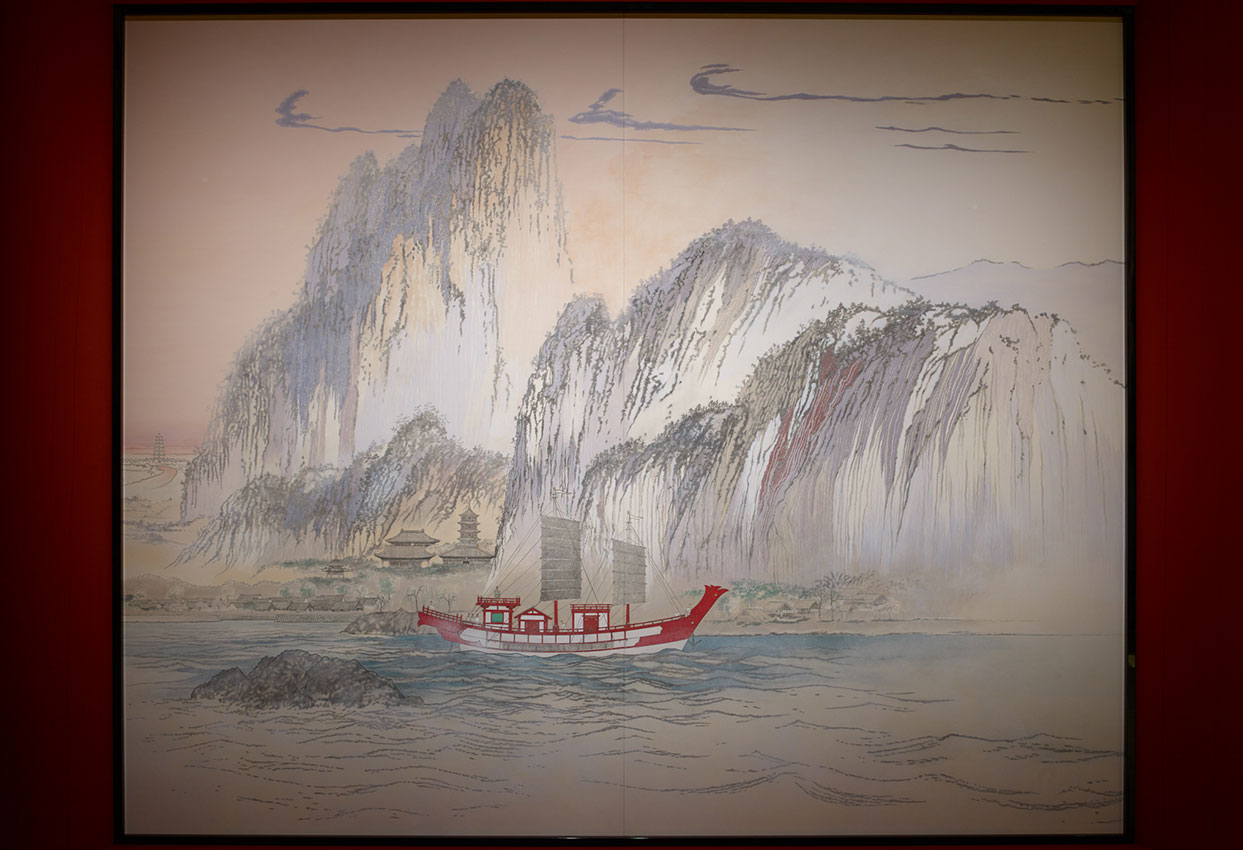
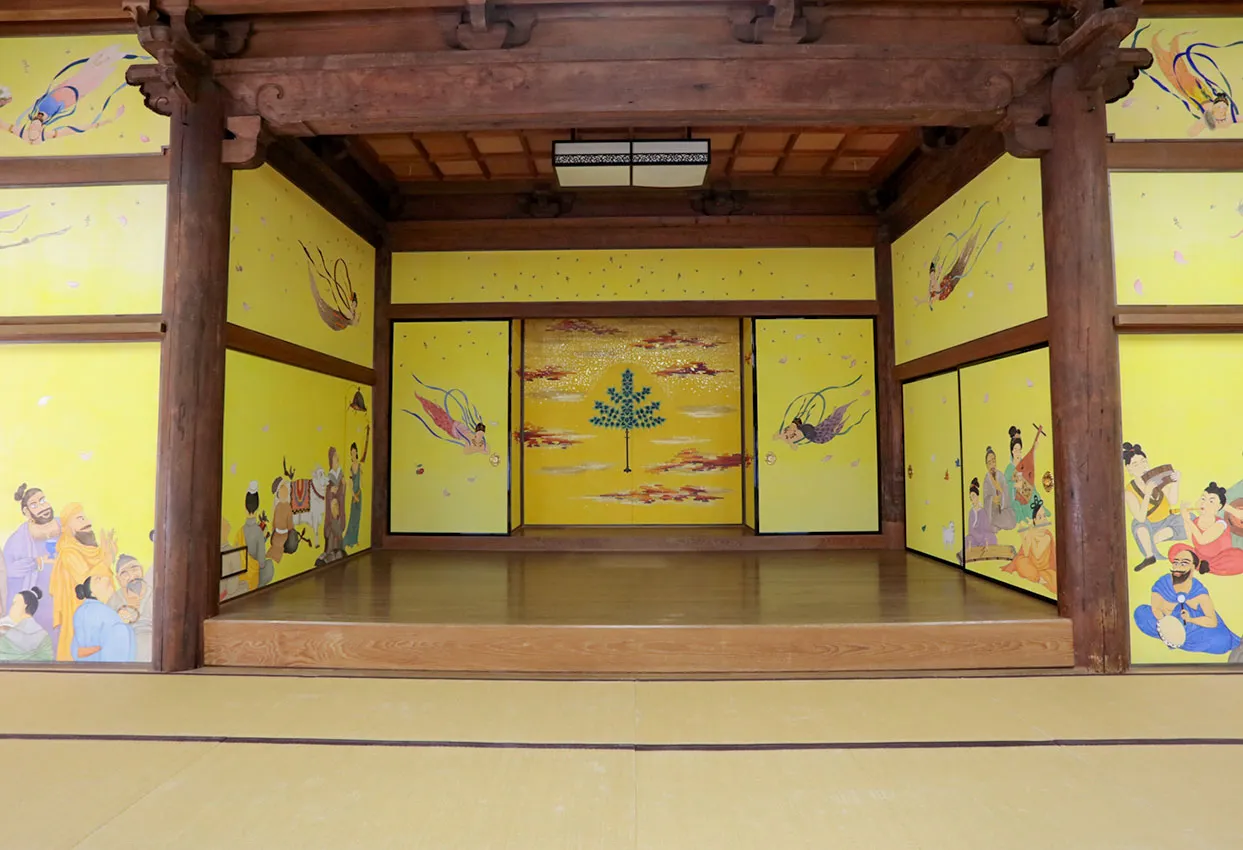
In 2019, artist and former prime minister Hosokawa Morihiro (b. 1938) painted a mural titled The Fusion of East and West in the Jionden. His work comprises 66 panels that encircle the large main room. The mural was inspired by the Silk Road and Genjo Sanzo’s arduous journey to India in search of Buddhist texts. The sutras he brought back to China became the foundation of the Hosso school, which was propagated by his disciple Jion. On the back left wall, a painting of Jion depicts him looking over his shoulder in the direction of his master Genjo’s statue, which is housed in the pagoda behind the Jionden. The pagoda houses a fragment of Genjo’s skull.
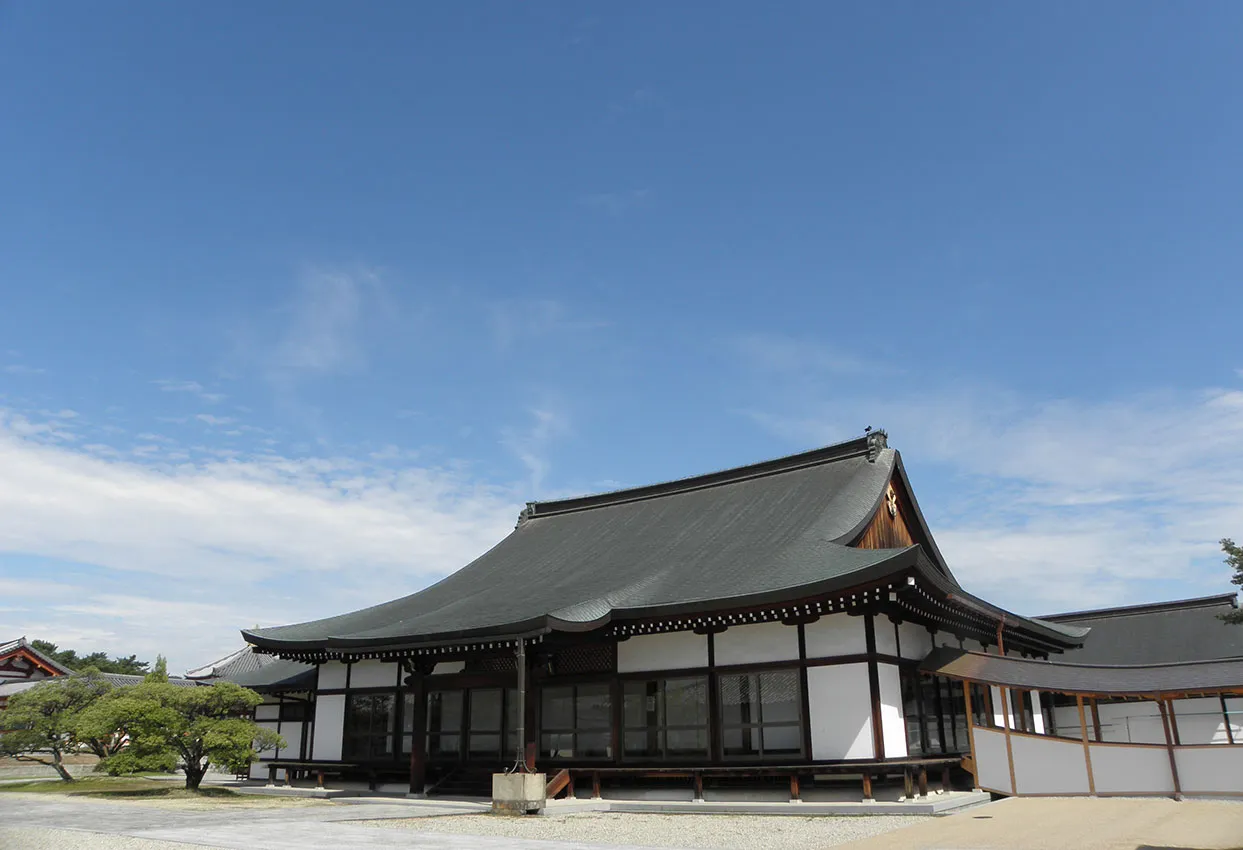
The Jionden was once the main hall of Chokyuji Temple, which is located in Osaka. During a major downsizing of Chokyuji in 1962, the Jionden was moved to Yakushiji. In 1984, it was again moved and made a part of Yakushiji’s new Genjo Sanzoin Complex. The relocation was completed in 1988, and the building was renamed the Jionden Hall.
Based on its architectural style and the techniques used in its construction, experts believe the Jionden was originally erected in the early seventeenth century. Its traditional hip-and-gable roof is clad in copper sheeting, which hints at the structure’s prestigious origins. Chokyuji Temple’s records show this building was constructed under the patronage of Yodo-dono (1567–1615), the second wife of the powerful warlord Toyotomi Hideyoshi (1537–1598). Yodo-dono purportedly commissioned it to pray for the military success of her son Toyotomi Hideyori (1593–1615), and the construction used surplus materials from the building of Osaka Castle. Although the original Osaka Castle was destroyed in 1615, pieces of its history survive in the Jionden today.
The Jionden is open to the public from late April through early May and in late October to early November for exhibitions of the mural The Fusion of East and West.